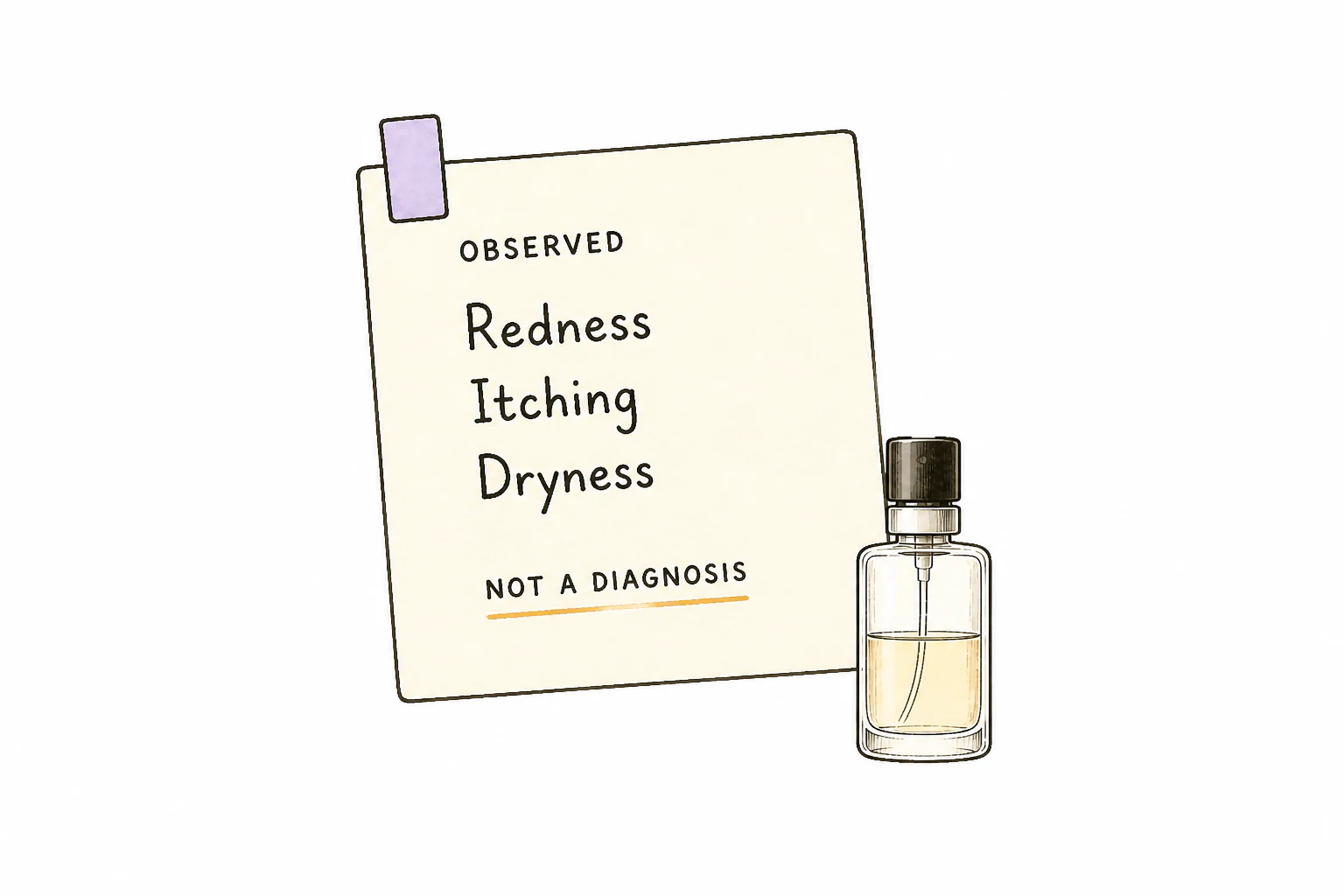
Perfume allergy and fragrance sensitivity are not the same for everyone. Skin can react to fragrance through irritation, sensitivity, or a true allergy. They can feel similar but may need different responses. Careful reading, patch testing, and modest habits cover most everyday cases; persistent or serious reactions should be discussed with a medical professional.Scenday’s rule: observe on skin, patch-test, and let a doctor diagnose.
Card 09 · one of 11 in the guides catalogue
Know the difference
Not every unhappy patch of skin means allergy. Fragrance can disagree with skin in more than one way, and the words matter because the sensible responses differ. Irritation is usually a direct, local response: often quick, often milder, often better once the product is gone. Sensitivity is a looser, everyday word for skin that reacts easily to many things. A true allergy involves the immune system: once skin is sensitised to an ingredient, even small exposures can trigger a reaction, sometimes a day or two later.
They can feel similar from the outside (redness, itching, dryness) but may need different responses, and telling them apart reliably is a job for professionals, not product labels. What this guide can do is keep the language practical and encourage careful reading, testing, and medical advice when reactions are serious.
Patch testing: the home habit and the clinical tool
Two very different things share the name, and the difference is worth keeping straight. The home habit: apply a small amount of a new product to a small area of skin (commonly the inner forearm) and wait a day or two before using it normally. It is not a diagnosis; it is a modest early-warning habit that catches many obvious mismatches cheaply. The clinical procedure: formal patch testing done by a dermatology professional, using standardised panels of allergens applied under patches for days and then read: the tool that can actually identify which ingredient your skin objects to.
Safer everyday habits
Most of the practical ground is covered by a few unglamorous habits: patch-test new products before regular use, and stop use if irritation occurs; spray clothing instead of skin when you want distance from an ingredient (mindful that fabric holds scent and some fabrics stain); read ingredient lists (the fragrance-free guide covers the labelling language); and remember that layering applies more fragrance to your skin, which can increase exposure to common fragrance allergens. Keep the packaging of anything that caused trouble: its ingredient list is exactly what a clinician will ask about.
When a reaction deserves a doctor
Notice, stop, keep, and the box the pen won’t tick
The case opens. The card settles, the incident clips on as a specimen, and the pen starts down the margin: Notice, tick.
Two more ticks are yours. Stop use; keep the pack, dated and sleeved in its specimen box. The card fills calmly.
The ink stops. A blot above the last row (the pen stops here) and the amber REFER stamp lands from outside. The last box stays empty; it was never the pen’s to tick.
Questions people ask
What does a fragrance skin reaction usually look like?
Commonly redness, itching, or dryness where a product touched the skin, sometimes hours or days later. Reactions vary from person to person, though: anything persistent, spreading, or severe is a reason to speak to a medical professional rather than self-diagnose.
Can you suddenly react to a perfume you have worn for years?
Yes, it can happen. Skin can become sensitised to an ingredient over repeated exposure, and formulas are sometimes quietly reformulated. A new reaction to an old favourite is worth taking seriously, not dismissing.
What is patch testing?
Two different things share the name. At home, it usually means trying a small amount of product on a patch of skin for a day or two before regular use. Clinically, it is a formal diagnostic procedure where a dermatology professional applies standardised allergens to the skin to identify what you react to.
Should I stop wearing fragrance if my skin reacts?
Stopping use of the suspected product is generally the sensible first step, and many people can still enjoy fragrance by spraying clothing rather than skin or choosing different formulas. For repeated or serious reactions, get professional advice before experimenting further.
Sources & further reading
- NHS on contact dermatitis: symptoms, causes and patch testing
- DermNet on fragrance allergy: causes, symptoms, and patch testing
- IFRA, the International Fragrance Association: fragrance safety standards
- Commission Regulation (EU) 2023/1545: the rules requiring named fragrance allergens on a cosmetic ingredient list
How this lesson was made
- Written and edited by the Scenday Editorial Desk.
- Founder-reviewed on .
- 4 primary sources cited (see Sources & further reading above).
- Changes to this lesson are recorded in our Corrections & updates log.