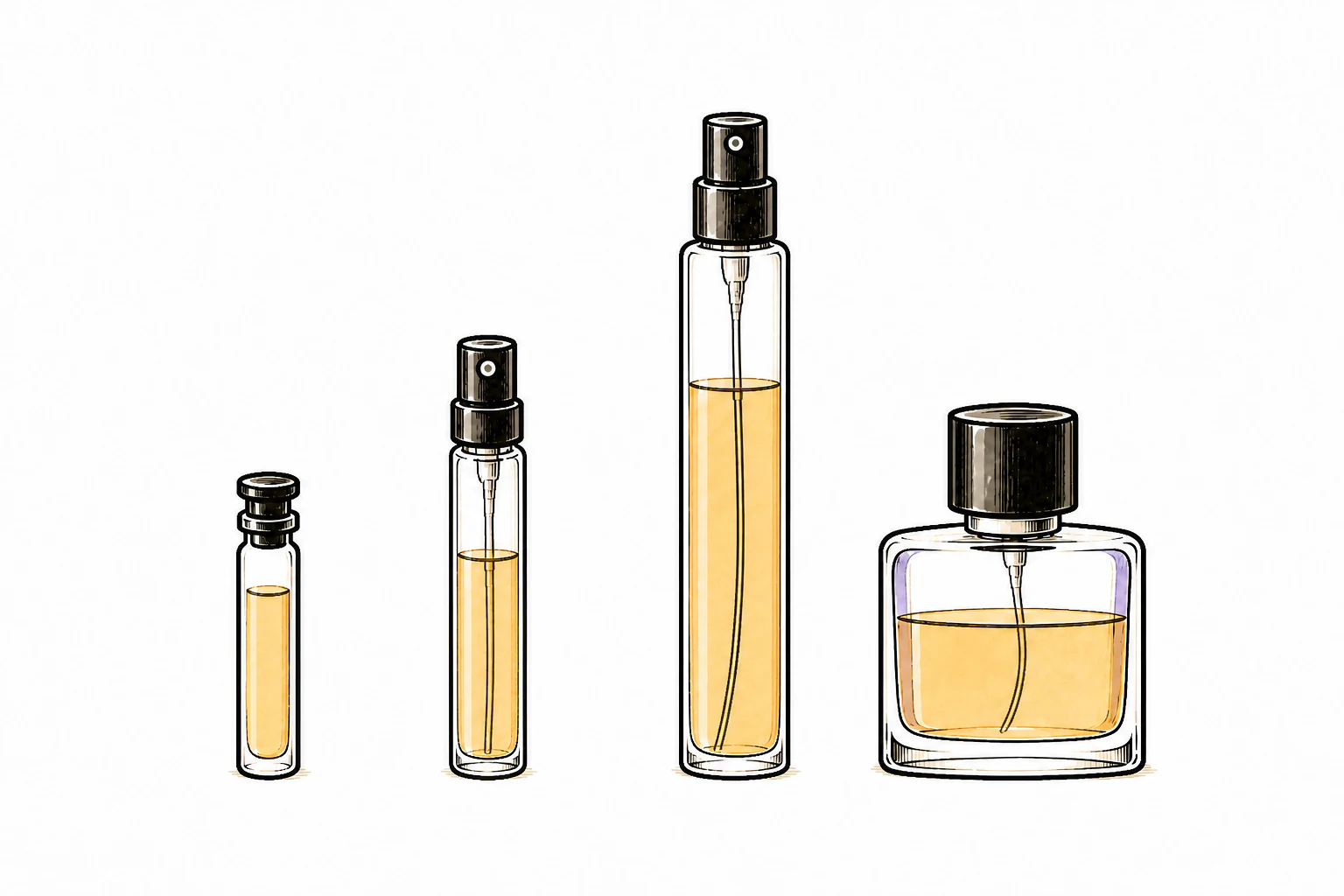
A sample is decision insurance: a vial of 0.7ml to 2ml covers two or three full wears for a fraction of a bottle's price. Sample sets bundle assortments; discovery sets are a brand’s own introduction in miniature. Judge cost per wear, not price per bottle.Scenday’s rule: sample first, buy the bottle second.
Card 10 · one of 11 in the guides catalogue
What counts as a sample
A perfume sample is any small, resealable dose of a real fragrance sold or given for testing. The format matters less than the honesty of the dose: enough liquid for full wears, from the same batch as the bottle it represents. Four formats cover nearly everything you will meet.
A stoppered or spray vial, typically 0.7ml to 2ml. Two or three proper wears; the format most counters hand out and most sample sets are built from.
Fragrance transferred from an original bottle into a smaller atomiser. A decant buys weeks of wear: the right size when a sample impressed you but the bottle price demands certainty.
A brand-bottled small size. Costs more per millilitre than a full bottle, but turns a wardrobe of occasional wears into an affordable shelf.
The slim spray cards and tubes brands package for retail. Identical juice, honest dose, built for exactly the testing this chapter describes.
Four formats, measured in months, not millilitres
Three or four sprays make a wear. The legend does the arithmetic. The vial performs it: a weekend of the month inked, then the glass runs dry. The spray card repeats it: same honest dose.
The decant buys the whole month. Twenty-eight ghost days flood amber in one sweep, the counter racing, ten millilitres leaving the glass as the weeks land.
The mini scatters across the months. Forty-odd occasional wears, a dozen inked here: divide any price by its days and the “expensive” sample turns cheap. The stamp lands.
Sample sets vs discovery sets
The two names get used interchangeably; they are not the same thing. A sample set is an assortment of individual samples, often mixed across brands and picked by a retailer or by you. A discovery set is curated by one house as an introduction to its own collection: usually the core lineup in miniature. Sets answer "what do I like across the map"; discovery sets answer "do I like this house".
Some brands credit a discovery set's price against a later full bottle, which quietly converts your testing budget into a deposit. Worth checking before you buy either kind: it changes the math below.
The cost-per-wear math
A millilitre is roughly ten sprays, and a proper wear takes three to four sprays. So a 2ml vial holds four to six full wears; a 10ml decant holds a month of them. Divide price by wears and the hierarchy inverts: the "expensive" sample is almost always the cheapest fragrance decision you can make, and the bargain bottle that never gets worn is the most expensive.
The behaviour is already mainstream: in Highsnobiety's fragrance survey, 80% of enthusiasts test before buying, YouGov finds 88% say the scent itself decides a purchase while one in three bottles is still bought over a screen, and WWD reports minis and discovery formats growing three times faster than full sizes. Testing first is not a niche habit; it is where the market is going.
Where samples come from
Four honest channels, no brand allegiance required: counters, where a spray sample is yours for the asking once a conversation is real; brand discovery sets, ordered directly from the house; decant culture, where enthusiasts split full bottles into smaller atomisers; and subscription or curated sets, useful when you want breadth chosen for you. Each trades money for curation differently, and none of them requires a blind buy.
What to sample first
Sampling without direction burns money slowly instead of quickly. Start from your scent profile: the families you already reach for, the longevity you actually need, and the settings you dress for. The discovery guide explains the thinking, the perfume finder filters by notes, occasion, and budget, and the next lesson turns it all into a five-step testing method.
The 60-second quiz is in development: it will sketch your scent profile so a first sample order points somewhere specific, not at a bestseller list. Get early access and we will tell you the day it opens.
What the quiz will do →Questions people ask
How big is a perfume sample?
Most vial samples hold 0.7ml to 2ml, spray samples typically 1.5ml to 2ml, and decants 5ml to 10ml. A millilitre is roughly ten sprays, so even a small vial covers two or three proper wears.
What is the difference between a sample set and a discovery set?
A sample set is an assortment of individual samples, often mixed across brands. A discovery set is curated by one brand as an introduction to its own collection, usually its core lineup in miniature, boxed and priced as a first step.
How many wears do you get from a 2ml sample?
Roughly four to six full wears at three to four sprays each: enough to test a fragrance across different days, weather, and settings before any bottle decision.
Are perfume samples worth it?
Almost always. A misjudged full bottle is the most expensive mistake in fragrance; a sample costs a fraction of that and answers the only question that matters: how the fragrance wears on your skin.
Sources & further reading
How this lesson was made
- Written and edited by the Scenday Editorial Desk.
- Founder-reviewed on .
- 3 primary sources cited (see Sources & further reading above).
- Changes to this lesson are recorded in our Corrections & updates log.